
What Makes WorldTour Cycling Kit Different? Inside the Fabrics, Fit and Finish of Pro Apparel
Share
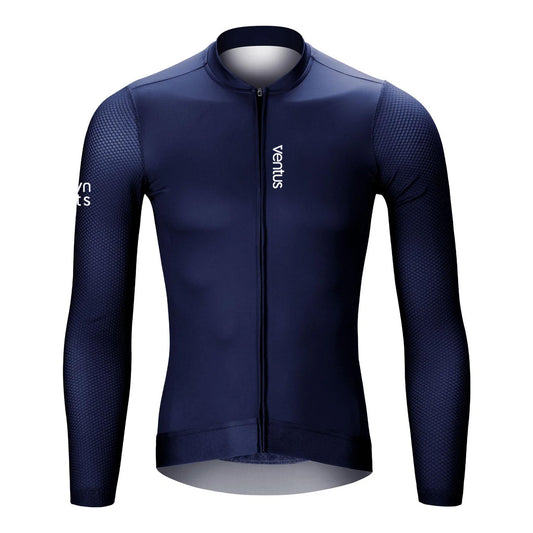
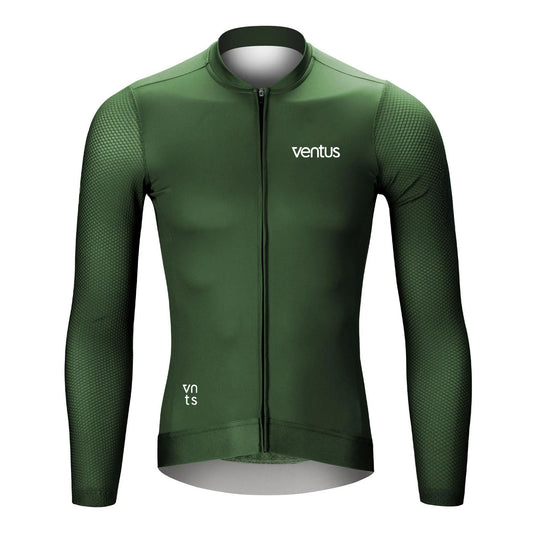
A WorldTour cycling jersey looks deceptively simple. A bit of stretchy fabric, a zip, three back pockets. But every panel of an aero race jersey, every seam on an Pro bib short, every fabric choice in a Santini Trek-Lidl kit is the product of decades of refinement and millions in R&D.
The good news for serious cyclists is that the gap between pro-level apparel and what you can buy on the high street is narrower than the price tags suggest. The bad news for cycling brands trying to compete at the top is that closing that gap takes obsessive attention to four things working together: fabric, fit, finish and feel.
Here's what's actually inside a WorldTour race kit, and why it sits on a rider's body the way it does.
The three pillars of pro cycling apparel
Before we get into specific fabrics and construction techniques, it's worth understanding the framework. Pro kit feels different because three disciplines have to be executed at obsessive levels and getting any one of them wrong means the rider notices in the first ten minutes of a four-hour ride.
Pillar 1: Fabric (roughly 45% of how kit feels)
The textile itself is the foundation. Pro jerseys use Italian warp-knit polyester and elastane composites engineered for very specific properties, moisture wicking in under three seconds, UPF 30 to 50+ sun protection, four-way stretch, and crucially, a controlled surface texture that's optimised for airflow rather than smoothness.
Pillar 2: Pattern (roughly 35%)
A jersey patterned on a standing mannequin will always bunch at the stomach and ride up at the back when you get into the drops. Pro kit is drafted with the rider in race position, torso forward, arms reaching, shoulders rolled. This is the most overlooked discipline in cycling apparel, and the one that separates serious brands from generic ones.
Pillar 3: Construction (roughly 20%)
Raw-cut sleeve hems, bonded seams in high-friction zones, laser-cut panels, integrated silicone grippers, internal collar tape that doesn't chafe; these are the details a skilled rider can spot across a room. Construction is where amateur brands get exposed.
How compression and elastane really work in pro cycling apparel
One of the biggest myths in cycling kit is that "more elastane equals better." It's more nuanced than that. The percentage of elastane (also called Lycra or Spandex depending on the brand) determines how much the fabric stretches and recovers, but the same fabric used everywhere on a garment would feel terrible.
What "compression" actually delivers
Compression isn't just about looking lean. In bib shorts, properly graduated compression has been shown to reduce muscle oscillation during pedalling, which translates to lower perceived effort over long rides. It also keeps the chamois pad in the correct anatomical position, a chamois that shifts is a chamois that causes saddle sores.
In jerseys, compression's main job is aerodynamic. A loose jersey creates a turbulent wake behind the rider; a compressive jersey reduces that wake by keeping the fabric flush against the body. At 40 km/h, the difference can be several watts.
Why the pattern is drafted in the race position
This is the section most cycling brands gloss over, and it's the one that matters most. A jersey is a three-dimensional shape draped on a body that moves through three planes simultaneously. Pattern-making for cycling is fundamentally different from pattern-making for fashion or even running apparel.
The details that signal a real race pattern
There are visual clues that tell you a jersey has been patterned for cycling rather than as generic activewear:
- Shoulder seams pulled forward - they sit on top of the shoulder, not on the back, so they don't get stretched out by reaching arms.
- Dropped tail - the back is significantly longer than the front to keep the lower back covered when the rider is in the drops.
- Shorter front length - to avoid bunching at the stomach when the torso compresses forward.
- Curved sleeve seams - following the bend of the elbow rather than running straight down the arm.
- Higher armhole, lower neck - armholes sit close to the armpit to avoid drag; collars are low for full breathing capacity.
The takeaway
WorldTour cycling apparel isn't built on secret materials. The Italian mills that supply the entire pro peloton are accessible to any brand willing to invest in the right minimum order quantities, the right pattern maker and the right factory. What separates the best from the rest is discipline, the unglamorous work of testing fabric placement, refining patterns over multiple seasons, and obsessing over construction details most riders never consciously notice.
The next time you pull on a kit and it doesn't feel quite right, bunching at the stomach, riding up at the back, pulling at the shoulders when you reach for the drops, you'll know exactly which discipline let you down. And the next time you wear one that feels like it disappears, you'll appreciate what went into making it.
About this article. Research compiled from public technical literature including UCI Technical Regulation (2026 edition), MITI and Carvico product documentation, peer-reviewed cycling aerodynamics studies from TU Eindhoven and MDPI Applied Sciences, and product specifications published by Castelli, Santini, Assos, Rapha, Sportful and Pissei.